From a kernel of an idea
to a living, breathing game.
Our four-phase methodology is a forge for creative ambition. It’s a rigorous, transparent framework designed to balance artistry with engineering, ensuring every asset, line of code, and design decision serves the player experience.
The Genesis Protocol
Validation before velocity. We stress-test creative ambition against market data and technical constraints.
L Decision Lens
-
•
Core Loop Viability: Does it hold attention for 60 seconds without tutorial?
-
•
Technical Debt Forecast: Will the architecture scale for 1M+ concurrent users?
-
•
Thermal Constraint: Can it run on a 3-year-old device for 30 mins without overheating?
-
•
Cultural Resonance: Do local metaphors translate for global audiences?
T Key Terms
"An indie client pitched a massive open-world RPG for mobile. Our Genesis Protocol surfaced a critical constraint: the target device's RAM limited the world size. We pivoted to a denser, more focused hub-and-spoke design, which ultimately led to a higher metacritic score by delivering a polished, deeper experience."
— Lead Producer, Scenario 2025-Q3
The Forge: Production & Synthesis
Where art meets engineering. The kinetic energy of the workshop, documented and optimized.
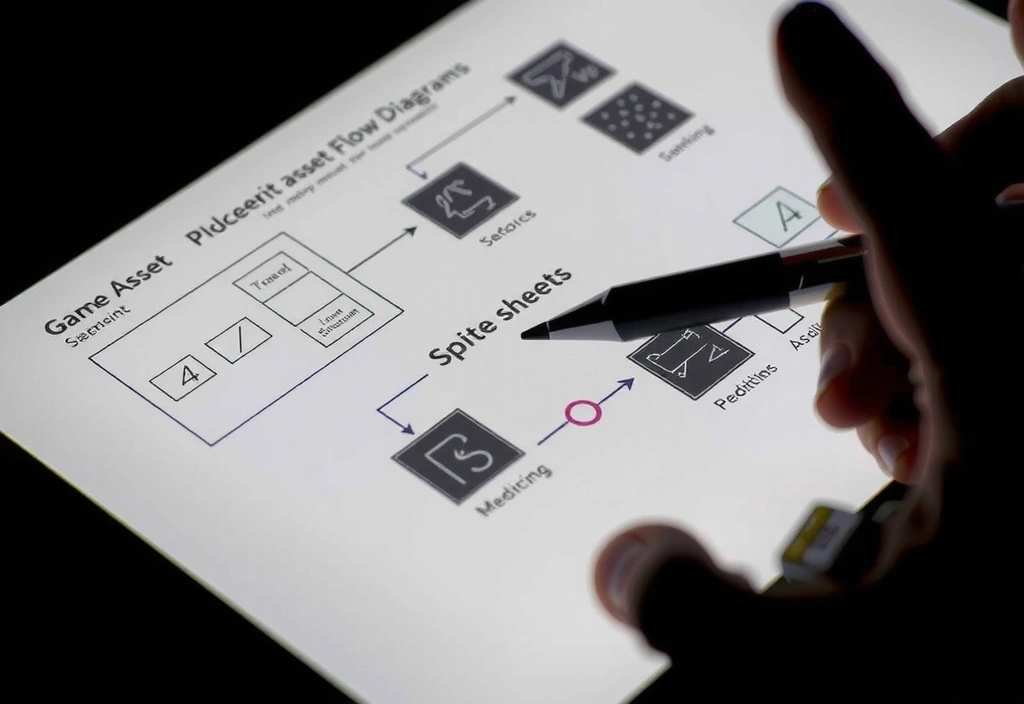
Asset Pipeline
Structured tagging system for 10,000+ sprites. Retrieval time: <50ms.
"Code before skin. The 'Golden Path' rigging must feel right in raw logic before a single pixel is painted."
assetLoader.preloadBatch(
  'core-ui',
  priority: 'CRITICAL',
  fallback: 'spinner'
)
 Cross-Platform Shader
Method Note
Performance baselines are established on the median 2024 device spec, not the flagship. This avoids optimizing for a minority.
Critical Trade-offs in Production
-
D
Feature: High-fidelity particle systems↓ Battery drain increases by ~18% on mid-range devices.Mitigation: Implement dynamic LOD (Level of Detail) scaling based on thermal state.
-
D
Feature: Real-time global lighting↑ Frame rate volatility on older GPUs.Mitigation: Bake lighting for static elements; reserve real-time for player-driven elements.
The Crucible
QA is not a department; it's the game's immune system. Our goal isn't just to find bugs—it's to stress the experience until it's unbreakable.
The 'Break-It' sessions are our favorite. A dedicated team, given no other objective than to crash the game using the most esoteric inputs. They attack the GPU with a million particle spawns, they overload the network stack, they attempt to break the physics engine through contradictory inputs.
We profile latency to the microsecond, identifying not just frame drops, but the exact milliseconds lost to texture streaming or garbage collection. This data isn't archived; it's baked into the optimization pass. Every localization string is vetted not just for translation, but for cultural nuance—a Turkish proverb might need a different root metaphor for an English-speaking audience.
"Perfection is not the absence of flaws. It's the absence of the flaw that happens when a player is about to achieve their most meaningful moment."
Our 'Day-1' patch strategy begins in Alpha. We categorize potential critical issues into three tiers, and for each, a fix is pre-written, pre-tested, and ready for deployment. The game might be approved by the store, but our readiness for the player is already on its next iteration.
Launch & The Feedback Loop
The launch is a comma, not a period. Our systems activate to ensure the player's voice directly fuels the game's evolution.
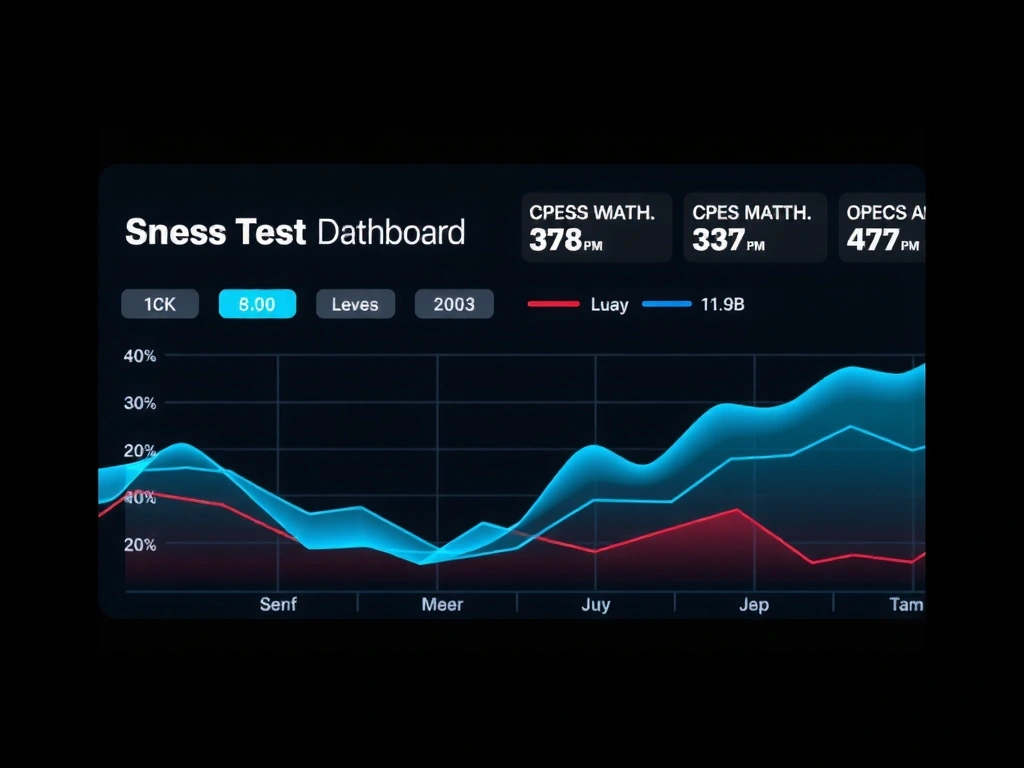
Within 60 minutes of global launch, our dashboard shows heatmaps of player interaction, funnel drop-off points, and resource usage spikes. This isn't for panic; it's for precise, surgical iteration.
NLP analysis identifies key themes—bug reports, feature requests, praise. This prioritizes the queue for the next update. We separate signal from noise, focusing on experience-breaking issues first.
A pre-staged, tested patch can be deployed in minutes. The player sees a seamless transition, often unaware a critical flaw was just addressed. Stability is a service, not a release date.
Using real-world data, we identify which assets cause load hitches on older devices. We then generate alternative assets (lower poly, compressed) that activate for specific device profiles, extending the game's life and reach.
Key Takeaway
The difference between a shipped game and a living platform is the strength of the feedback loop. Our process is built to amplify player voice, turning raw data into a roadmap for retention and growth.
Ready to build with rigor?
Share your concept with our team. We'll walk you through our Genesis Protocol and show you the exact constraints and opportunities for your game.